Hello. I'm Hijiri Fujishima from Be Myself LLC.
On the evening of August 6th, there was a live painting event by Yasuhiro Terashima.
The event name was
"Ask the sky on August 6th: Drawing, Playing, and Speaking to the Sky on August 6th".
This event, which invites contemplation on Hiroshima starting today,
was planned by jazz pianist Chizuru Ohmae.
A report on this event can be found in Terashima's article, so please take a look.
In this article, I will write about what resonated with me.
The generation that doesn't know war.
I believe everyone thinks, 'It has nothing to do with me.'
Even for me, in my 50s, honestly,
'War is the past. Or, a story from another country.'
But in reality, it wasn't that long ago;
my beloved grandmother was caught in the turmoil,
and at least, both my parents were already born.
My mother was born in 1941, so she doesn't seem to have many memories,
but my father was born in 1937.
During the war, he lived in mainland China (Jinan),
and my grandparents apparently ran a general store there.
After the war, they passed through Qingdao, crossed to Nagasaki,
and barely made it back to Fukui Prefecture alive.
I heard directly from my father about the terrifying memories of their journey to Qingdao.
Even after returning to Japan, my father was reportedly subjected to harsh words for being a 'returnee from China.'
It was this country that spread 'poison' among my parents when they were children.
Perhaps there's a strong connection between our feeling of 'poison' within our own parents and past wars.
In other words, war might not truly be over for the Japanese people yet.
Because even we, in our 50s, are still affected by it.
And then, about the atomic bomb.
The shock of the manga 'Barefoot Gen', which depicted vivid memories.
Even though I read it nearly 50 years ago, I still haven't forgotten it.
Those images still surface in my mind.
My older sister went on to Hiroshima University,
and because I loved my sister dearly, I visited Hiroshima many times.
Once I got my motorcycle license, I rode there.
Therefore, for me, 'Hiroshima' is
something relatively close,
despite having no relatives there.
Perhaps that's why.
Every year on August 6th, I feel restless from the morning.
I observe a moment of silence.
Sometimes I tear up while watching the live broadcast of the ceremony.
Nevertheless, I don't understand the true suffering.
There's no way I could understand.
No matter how many times I visit Hiroshima,
no matter how much I imagine, I won't understand.
Above all, because it's not 'my own affair.'
That's precisely why I listened to Mr. Morita's story this time,
feeling deeply moved and teary-eyed.
At the end of the second part of this event,
there was a talk by Toshiya Morita, a second-generation atomic bomb survivor.
I was helping with the cleanup of Terashima's paintings,
so I couldn't listen from the very beginning,
but this year's story particularly resonated with me.
Mr. Morita's mother's story.
She was about twenty years old during the war.
It was a story not about the Hiroshima atomic bomb,
but about when she was caught in an air raid.
She was reportedly tasked with the role of
'taking the ancestral tablet and fleeing to the air-raid shelter.'
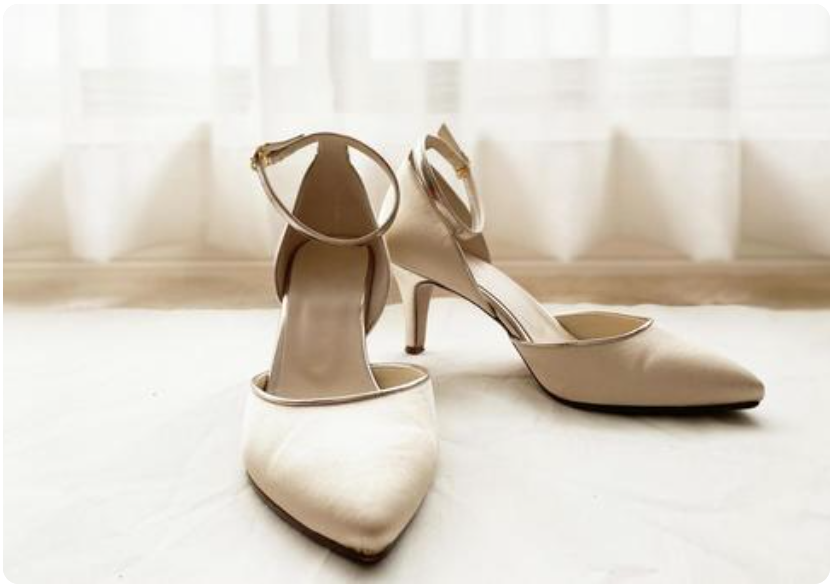
However, her treasure at the time was
'white enamel pumps.'
So, she wrapped those pumps and the ancestral tablet in a furoshiki (wrapping cloth)
and ran through the air raid to escape.
And when the furoshiki caught fire,
she reportedly secretly prayed,
'Please, let what's burning not be the pumps.'
That was the real feeling of a twenty-year-old girl.
That story deeply resonated with me.
I apologize, but
for a twenty-year-old girl,
white pumps were more important than an ancestral tablet.
The fear and anxiety of a twenty-year-old girl fleeing through raging flames, and her feelings for those pumps.
When we hear stories of war, don't we somehow
imagine a somewhat composed, old-fashioned Japanese person?
Don't we imagine calm, proper young people who use difficult words and write beautiful characters?
Those were the young people in their teens and twenties at the time,
forced to become 'adults' in a Japan where adults were absent due to being conscripted into war,
with no other choice but to do so.
Through this episode of the pumps,
I was able to glimpse their life-sized emotions.
Children during the war who truly wanted to have fun,
to play sports to their heart's content, read books,
sing and dance,
but were not allowed to.
When I think that their lives were taken,
the atomic bomb and air raids feel even more sinful and oppressive.
Opportunities to hear such firsthand stories
will likely decrease even further from now on.
So, what happened to Mr. Morita's mother's pumps?
Why not meet Mr. Morita and ask him?
He is involved in various activities, so please check them out.
・Towards Tomorrow - Toshiya Morita Web
https://toshikyoto.com/